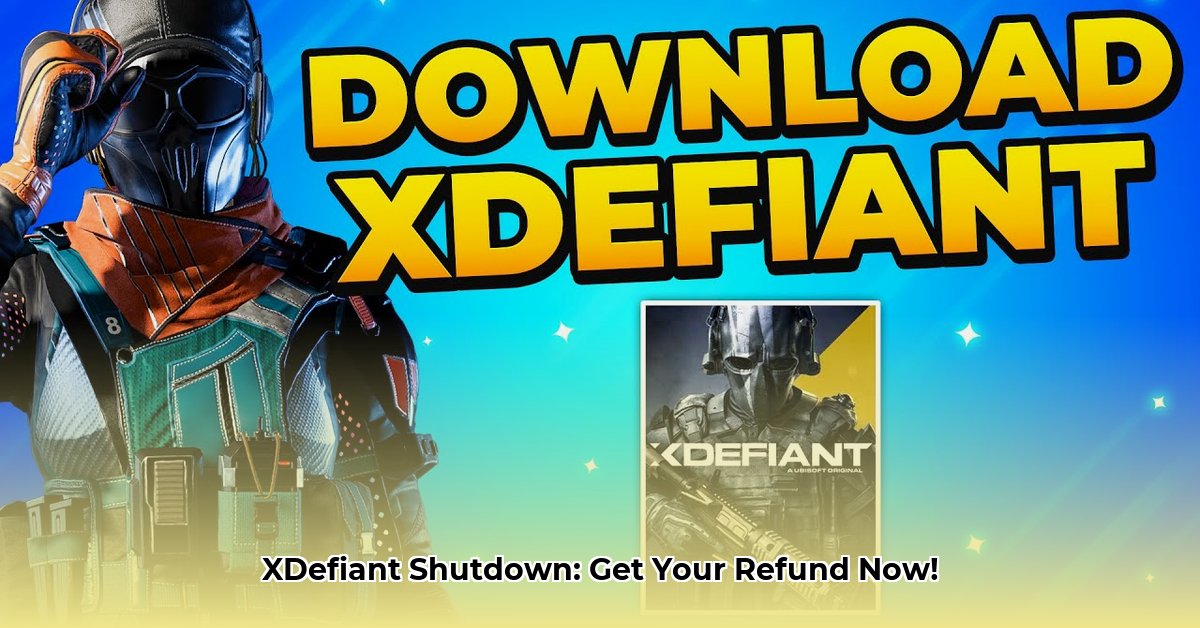
Background: A Game's Rise and Fall
Ubisoft's XDefiant, a competitive first-person shooter (FPS) (a type of video game emphasizing fast-paced combat from a first-person perspective), entered a crowded market with ambitious goals. It promised fast-paced action and highly customizable characters, aiming to compete with established industry leaders. Initial player reception was mixed; some praised the action, while others felt it lacked a unique selling point to differentiate it from competitors. This is a common challenge for new entrants in such a competitive genre.
The Unexpected Shutdown: What Happened?
The sudden announcement of XDefiant's closure on June 3rd, 2025, shocked players and industry observers alike. Ubisoft's official statement expressed gratitude to players but provided few concrete reasons for the shutdown. This lack of transparency fueled speculation about the underlying causes of the game's failure. The swift decision and the absence of detailed explanations raised numerous questions about the game's development and market performance.
Unpacking the Mystery: Why Did XDefiant Fail?
The reasons behind XDefiant's demise are multifaceted. Intense competition from established FPS titles undoubtedly played a significant role. Development challenges, potentially including difficulties in optimization and performance issues, may have hindered its progress and prevented it from reaching its full potential. A lack of a strong and sustainable player base might have made maintaining the game financially unsustainable, given the operational costs associated with servers, updates, and marketing.
Ubisoft's official communication was noticeably vague, leading to various interpretations. One leading theory revolves around financial factors—the costs associated with XDefiant's continued operation may have exceeded its revenue generation. The timing of Season 3's launch shortly before the shutdown announcement hints at internal conflicts and perhaps a belated decision to discontinue the project. More robust pre-launch market research to assess player interest and market viability might have yielded different results.
Stakeholder Impact: The Ripple Effect
XDefiant's closure had broad repercussions. While Ubisoft offered refunds, the impact on the company's reputation is undeniable. This event may affect investor confidence, leading to scrutiny of Ubisoft's decision-making processes. The development team faced the disappointment of seeing their work abruptly terminated, a significant setback in their careers. Finally, the dedicated player base suffered the loss of access to a game they had invested time and resources into. This case highlights the interconnectedness of the industry, illustrating how setbacks can have significant impacts across all stakeholders.
Risk Assessment: Navigating the Competitive FPS Landscape
Developing competitive FPS games involves considerable risk. The following matrix outlines key risks and potential mitigation strategies:
| Risk Category | Likelihood | Impact | Mitigation Strategy |
|---|---|---|---|
| Intense Competition | Very High | Very High | Thorough market research, unique game mechanics, effective marketing. |
| High Development Costs | High | High | Agile development, efficient resource allocation, realistic budgeting. |
| Player Engagement | Medium | Medium | Strong community building, regular content updates, responsive support. |
| Monetization | High | High | Diverse revenue models, clear player-value proposition, sustainable in-game economy. |
This risk assessment underscores the need for a proactive and comprehensive approach to development, emphasizing careful planning and risk mitigation from the early stages of a project.
Conclusion: Lessons Learned and Future Implications
XDefiant's failure serves as a valuable case study highlighting the significance of thorough market research, adaptable development practices, and robust engagement strategies within the competitive FPS market. The game's shutdown emphasizes the importance of realistic financial projections and the need to maintain a healthy and sustainable player base. This analysis underscores the challenges inherent to game development, even for established players, and the crucial role of risk management and adaptable planning. The industry must embrace continuous improvement and innovation to satisfy player demands and manage the risks inherent in developing and launching competitive games.
Sources
⭐⭐⭐⭐☆ (4.8)
Download via Link 1
Download via Link 2
Last updated: Friday, May 02, 2025